
Hyaluronic acid is found in numerous cosmetic products. But what exactly is it and how does this ingredient affect the skin? For skin with weak connective tissue, dry skin, or skin prone to wrinkles, hyaluronic acid can help support regeneration and give it more freshness.
What exactly is hyaluronic acid?
Hyaluronic acid is a substance produced by the body, belonging to the group of complex sugars. Your body naturally contains a lot of hyaluronic acid. It can be found, for example, in bones and in the skin; it acts as joint fluid and is present in cartilage. The vitreous humor in the eye also contains hyaluronic acid. In fact, it is even a main component of connective tissue. Here, hyaluronic acid has a plumping and supporting effect, as it has a water-binding property. In medicine, hyaluronic acid is used to reduce the effects of osteoarthritis on the body.
An important property of hyaluronic acid is its ability to bind fluid. Up to six liters of water can be bound by one gram of the acid. When hyaluronic acid combines with water, a material with a gel-like consistency is formed. This ensures that hyaluronic acid acts as a lubricant in the body. Your connective tissue needs a lot of fluid for adequate elasticity. The water-binding hyaluronic acid, as a main component, therefore has a comprehensive role. Weak connective tissue indicates, among other things, that there is not enough hyaluronic acid present.
However, it is not only hyaluronic acid that acts as a joint lubricant in your body or ensures that joints can move smoothly. In fact, this is referred to as synovial fluid. Synovial fluid is a combination of hyaluronic acid, lipids, proteins, and hyaluronic acid. This lubricant ensures that cartilage and joints are well supplied, do not rub against each other, and that inflammation does not occur. Therefore, synovial fluid is also referred to as joint lubricant or joint fluid.
With increasing age, the body is less able to produce hyaluronic acid. The signs of this vary. You might start to hear some cracking in your joints. The skin develops wrinkles and loses elasticity. This is a normal effect, but one you don't have to simply accept.
Important: Strictly scientifically speaking, the term is not "hyaluronic acid" but "hyaluronan." However, the terms "hyaluron" and "hyaluronic acid" continue to be used. The term always refers to the same ingredient.
Differences between short-chain and long-chain hyaluronic acid
To better understand how hyaluronic acid works in cosmetics, it is good to know that hyaluronic acid comes in different sizes and thus has different effects on the body.
In the body, hyaluronic acid is mostly found as long-chain hyaluronic acid. The molecular mass here is very high. However, studies have shown that skincare benefits more from short-chain hyaluronic acid. Its molecular mass is lower, allowing it to penetrate the skin barrier and reach deep into the skin.
Thus, both low-molecular-weight hyaluronic acid and high-molecular-weight hyaluronic acid can be processed. If the ingredient contains small hyaluronic acid chains, it penetrates much deeper into the skin, making it effective.
In cosmetic products, the use of hyaluronic acid is indicated by the term "Sodium Hyaluronate." It is not apparent whether it is long-chain or short-chain hyaluronic acid.

How the individual variants affect the skin
But how do you find out whether you should choose products with long-chain or short-chain hyaluronic acid? It all depends on the effect you hope to achieve from the cosmetic product.
High-molecular-weight hyaluronic acid as a moisture supplier
Although high-molecular-weight hyaluronic acid is not optimally absorbed into the skin, it still has an important function. When products with high-molecular-weight acid are applied to the skin, a reaction occurs. Keratin is present in your skin. Together with hyaluronic acid, keratin forms a compound and settles on the skin.
This film, which now forms, gives your skin both elasticity and moisture. The short-term effect calms the skin's appearance and has a soothing effect. In addition, hyaluronic acid has anti-inflammatory properties. So, if you suffer from redness of the skin or small inflammations, cosmetic products with high-molecular-weight hyaluronic acid are recommended.
Low-molecular-weight hyaluronic acid as a booster for the skin
Low-molecular-weight hyaluronic acid penetrates the skin barrier much better. It supports water binding in the skin and provides it with additional moisture. As a result, with regular use, the skin appears firmer and plumper. Initial small wrinkles that appear on your skin are reduced.
With the application of low-molecular-weight hyaluronic acid, the skin is not only supplied with moisture, but this moisture is also stored in the skin. This means that the effect is particularly long-lasting.
Do you suffer from very dry skin? Does your skin appear less firm and feel tight? Do you notice a lack of moisture? In this case, short-chain acids are a great help.
A special feature: Oligo-hyaluronic acid
Another exceptional variant is oligo-hyaluronic acid. This version is considered extremely short-chain. This makes it even more capable of penetrating skin barriers. However, oligo-hyaluronic acid is currently found in very few products, as it is considered particularly exquisite and difficult to obtain.
A look at the concentration and its effect on hyaluronic acid
To what extent does the concentration of hyaluronic acid in a product actually affect its efficacy? It is advisable to look at the respective products for this.
The concentration is usually indicated by terms such as 10%. However, this refers primarily to the mixture consisting of water and hyaluronic acid. A high-quality serum should have a concentration of 1%. This 1% represents pure hyaluronic acid.
The higher the content, the more unpleasant the active ingredient feels on the skin. The problem is that while the hyaluronic acid effect sets in, the skin becomes very sticky. This is also the case, among other things, when long-chain hyaluronic acid is used.
Areas of application for hyaluronic acid
The cosmetic applications for hyaluronan are diverse. However, often only the applications for wrinkles and dry skin are known. For comprehensive information on where hyaluronic acid truly unfolds its effects, let's examine the individual areas:
- Wrinkles
There are many promises in the fight against wrinkles, but only a few active ingredients that have a proven effect on the skin. One of these active ingredients is hyaluronic acid. Various studies have examined and confirmed its anti-wrinkle effect.
The effect primarily consists of the active ingredient providing a lot of moisture and visually plumping up the skin. In addition to this, you should take further precautions.
Your skin needs good daily UVA protection to prevent UV radiation from accelerating skin aging. Avoid stress and use products that supply your skin with Vitamin C and Vitamin E.
- Eye care
The skin around the eyes, in particular, is very sensitive. In this area, your skin is thin and susceptible to barrier disruptions. To prevent these from occurring in the first place, you should use an eye cream with hyaluronic acid.
The skin around the eyes requires active ingredients that strengthen the barrier. In addition to hyaluronic acid, these include substances with a high lipid content. Squalane, for example, has proven to be effective.
- Dry skin
The effect of hyaluronic acid on dry skin should not be underestimated. It is an excellent moisturizer and can provide immediate relief. However, keep in mind that your skin can only retain moisture if it is healthy and has a stable barrier. Therefore, also build up and strengthen your skin's barrier. This can be achieved, among other things, with active ingredients like ceramides.

How to properly use our serums with hyaluronic acid
A serum is an intensive treatment for the skin. Our skin is exposed to various influences throughout the day. In addition, there is the natural aging process, which also shows its effects. Intensive care is therefore absolutely recommended.
Your daily routines have a big impact on how your skin develops and how it looks. Incorporating a hyaluronic acid serum provides your skin with a high level of active ingredients.
A serum has a very light consistency. This is an advantage, as it allows them to penetrate deeper into the skin. This is also important so that the active ingredients can penetrate the skin and unfold their effect there.
The nourishing molecules contained in serums are tiny. As with hyaluronic acid itself, small molecules can more easily penetrate the skin barrier here too.
This makes serums excellent for:
- dry skin
- skin with pigment spots
- skin with pimples
- first wrinkles
Who is a serum suitable for?
Experts suggest that everyone should use a serum. This applies to both women and men. However, it is important to consider that every skin has different needs. Here we are again with the reference to the different types of hyaluronic acid.
Many serums are suitable for all skin types. But there are also products whose composition has been designed to primarily focus on a specific skin problem.
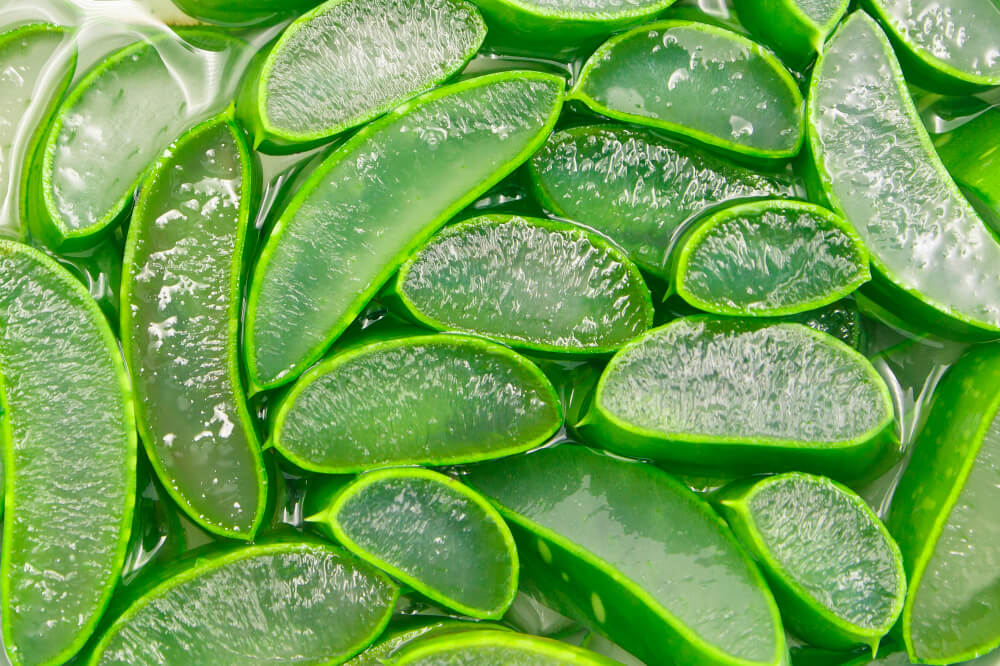
A serum with hyaluronic acid and aloe vera has a soothing, cooling, and refreshing effect. At the same time, the effect of hyaluronic acid provides an instant lift, which is visible after just a few applications.
Supporting collagen production helps your skin help itself and rebalance its moisture content.
How to correctly apply a serum
For hyaluronic acid to unleash its effects, correct application of your serum is important. The following steps are recommended:
- Cleanse your face with a suitable product, removing makeup, dirt, and dead skin cells. You can also use a peel, which makes the skin significantly more receptive.
- Make sure your skin is completely dry.
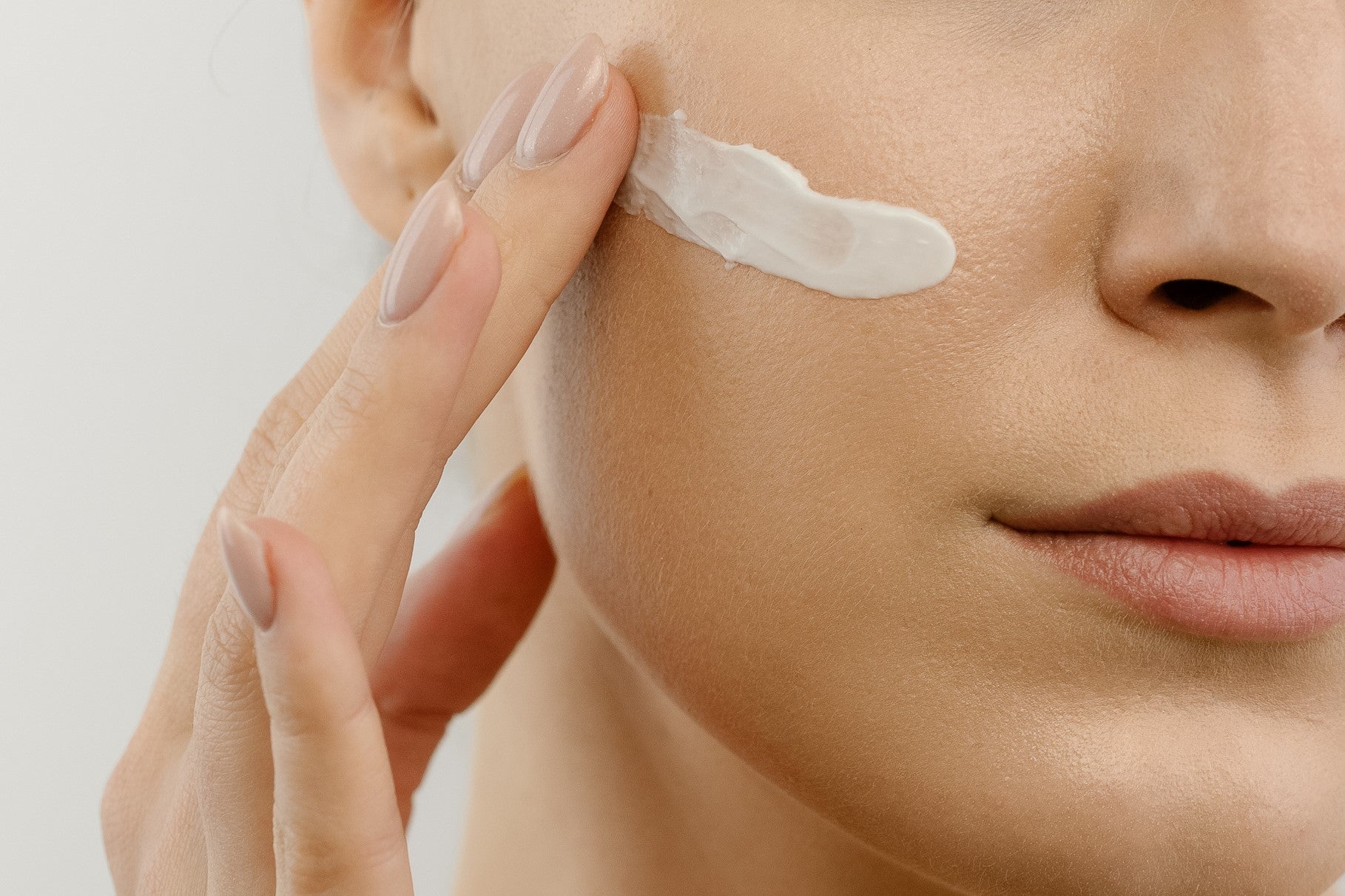
- Now apply the serum. But only apply a small amount to the skin. It is sufficient to apply one drop each to the cheeks, neck, and forehead.
- Now take your time and spread the serum. Use your fingers and work the active ingredients into your skin with circular motions.
- Now apply the moisturizer that is part of your routine.
How often and when you use a hyaluronic acid serum depends entirely on the product and your skin's individual needs.
For your skin to optimally regenerate and absorb and process the active ingredients, it is recommended to apply the serum in the evening. However, a serum can also be used in the morning.
Hyaluronic acid injections
In cosmetics, hyaluronic acid is used to improve the skin's appearance not only in serums or dietary supplements. There are also preparations used for wrinkle treatment in the form of injections.
Wrinkle injections are intended to make the skin appear firmer. Here too, the water-binding effect comes into play.
Hyaluronic acid injections can be performed in various areas of the face. Often, however, the focus is primarily on wrinkle injections for the nasolabial fold. This starts at the nose and extends down to the chin.
The effect itself does not occur immediately after the wrinkle treatment. Depending on how your skin layers react, the effect may only appear after two weeks.
It is fundamentally important that wrinkle treatment through injections is only performed by doctors who have undergone specialized training.
How useful are hyaluronic acid supplements?
Letting hyaluronic acid work from within? Even if you have hyaluronic acid in many areas of your body, such as the vitreous humor in the eye and the cartilage, this does not mean that it works even better when preparations are taken as dietary supplements.
A major problem with dietary supplements is that while hyaluronic acid is processed in the body, it does not reach the individual skin layers and therefore cannot exert any effect there. Therefore, it is more effective to apply hyaluronic acid directly to the skin for supple skin. This way, the skin's appearance can directly benefit.
What is the difference between collagen and hyaluronic acid?
When it comes to skin moisture and the elasticity of your complexion, you will hear both the terms "collagen" and "hyaluron." But what exactly is the difference here?
Collagen is a so-called structural protein that is produced by your body and is found in cartilage, teeth, bones, and skin. In the skin, its job is to provide elasticity. Especially when you are very young, your skin has high elasticity thanks to a high proportion of collagen. However, your body's production of collagen decreases with age. This is a similarity to the production of hyaluronic acid.
Did you know that even wound healing can take longer with age?
Cosmetic products do not contain collagen, but rather active ingredients that support your skin in producing collagen. If you use the products regularly, this can have a positive effect on your skin's appearance.
Collagen offers several benefits:
- It stabilizes the skin and maintains its elasticity.
- Collagen makes your skin look plump, smooth, and radiant.
- Your skin remains elastic.
Hyaluronic acid compared to collagen
Hyaluronic acid is also produced in the body and has an effect in the fight against skin aging. Hyaluron is found in joints, cartilage, and the skin – or rather, directly in the connective tissue. It is the main component of connective tissue. Without hyaluron, cells could neither exchange fluid nor nutrients.
When hyaluron is supplied through products, hyaluronic acid is actually used here. It provides the skin with moisture and ensures that this moisture can also be stored longer in the connective tissue. The skin appears fuller and smoother. Especially very dry skin benefits, as it needs a special amount of moisture.
Hyaluron or collagen – which works better as skin care?
But which of the two active ingredients has a better effect on the skin? This cannot be clearly stated. Therefore, experts recommend looking for a product that is enriched with hyaluronic acid, but at the same time also supports the production of collagen in the body.
It is not always possible to find products that contain both. Therefore, you can use a combination of several products.
It is important to pay attention to your skin's reactions. Normally, hyaluronic acid is very well tolerated and has no side effects. However, it is often used in combination with other active ingredients to support the effect of hyaluronic acid. In such cases, your skin might react.
Give your skin attention
Your skin experiences a lot every day and therefore works at full speed. It therefore needs attention. Give your skin this attention through high-quality care products, through which you can supply your skin with nutrients and finally make it shine again.